You did everything right for weeks. You ate in a calorie deficit, you trained three to four times a week. And then you got stuck. The scale hasn't moved in a long time.
This is a plateau, and almost everyone who diets for long enough hits one. It is not a failure. It is your body adapting — and adaptation has a clear solution.
In short
- It is a real plateau only when your weekly average stays flat for two weeks or more while you track accurately.
- It happens because a lighter body burns less: a 450 kcal deficit in week 1 can be about 100 kcal by week 12 on the same food.
- Fix it in small steps: about 250 kcal less a day, 2,000 more steps a day, or 2–3 cardio sessions a week.
- A one-week diet break at maintenance is the last option, after many weeks of dieting.
First, Make Sure It Is a Real Plateau
Three days of the same number on the scale is not a plateau. Daily weight moves up and down with water, salt, carbs and digestion, as we covered in Episode 3. A real plateau is when your weekly average stays flat for at least two weeks in a row while you are tracking accurately.
Before changing anything, check two things: that your weekly averages are genuinely flat, and that your food log is honest — oil, sauces and weekends included. Many plateaus turn out to be tracking gaps.

Why It Happens
As you lose weight, your body adapts. A lighter body burns fewer calories for the same movements, and many people also move a little less during the day without noticing. Slowly, your deficit shrinks — even though you are eating exactly the same as when you started.
| Week 1 | Week 12 | |
|---|---|---|
| Calories you eat | 1,950 | 1,950 |
| Calories you burn (TDEE) | ~2,400 | ~2,050 |
| Daily deficit | ~450 | ~100 |
Nothing about your discipline changed. The maths did. That is why the calorie target from Episode 2 is a starting point, not a number for life.
How to Get Unstuck
Some simple fixes. Pick the one that fits your life best — the right fix is the one you will actually keep doing. Apply it for two weeks, then check your weekly average again:
- Cut another 250 kcal a day — if there is room. Take it from carbs or fats and keep your protein where it is. If you are already eating very little, skip this one and use the next two instead.
- Add 2,000 steps a day. That is roughly a 15-minute walk. It is the easiest fix, and it doesn't touch your food at all.
- Add cardio two to three times a week. As we covered in Episode 10, cardio doesn't burn fat on its own — it makes the deficit bigger so you can keep losing.
For example: if you eat 1,950 kcal and your weekly average has been flat for two weeks, drop to 1,700 kcal — or stay at 1,950 and add a 15-minute walk every day. Either one restores part of the deficit your body has adapted away.

The Last Option: A Diet Break
If you have been dieting for a long time, the last option is a one-week diet break. For seven days you eat at maintenance, then you return to your deficit.
I know — eating more to lose fat sounds backwards. But a week at maintenance gives your hormones, your metabolism and your head a rest from dieting, and most people come back to the deficit with more energy and better focus. Expect the scale to rise slightly during the break from extra water and carbs — that is not fat.
This is recommended only after around eight weeks of dieting, not earlier. A diet break after two weeks isn't a strategy. It's just a break.
Mistakes That Make a Plateau Worse
- Cutting calories hard and fast. Dropping 500–800 kcal overnight makes hunger, energy and training worse, and it is rarely needed. Small changes of around 250 kcal are enough.
- Cutting protein to save calories. Protein is what protects your muscle and keeps you full. Take the calories from carbs and fats instead.
- Stopping training. Less training means less muscle, and less muscle means you burn even less. Keep lifting and keep chasing progressive overload.
- Changing everything at once. If you cut calories, add cardio and change your meals in the same week, you won't know what worked. Change one thing, then wait two weeks.
- Judging it after three days. Give every fix two full weeks of weekly averages before deciding it didn't work.
Why You Need to Track Everything
This is why it is so important to track it all: your weight, your food and your training. With all three logged, a plateau stops being a mystery — you can see exactly whether the deficit shrank, whether your portions crept up, or whether your training dropped off. You leave no room for failure.
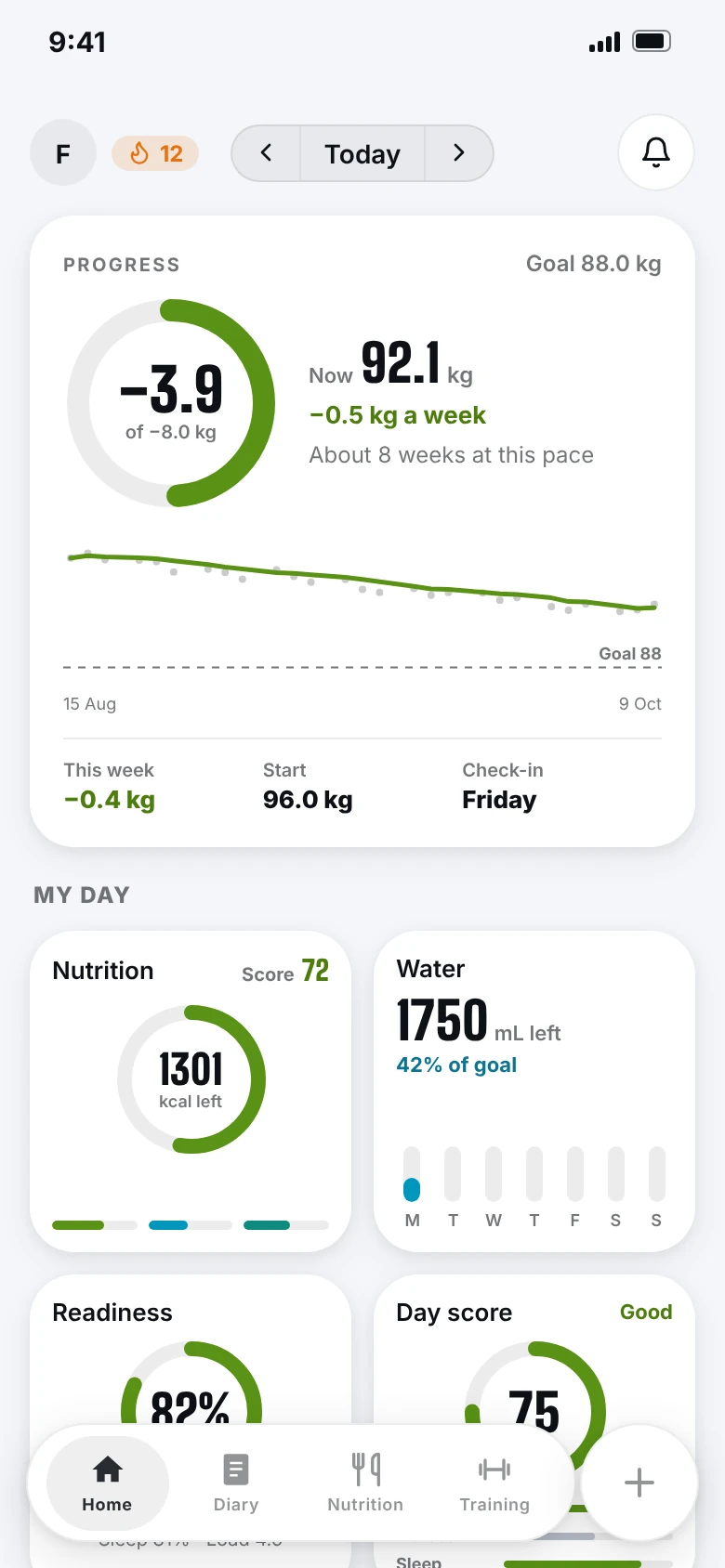
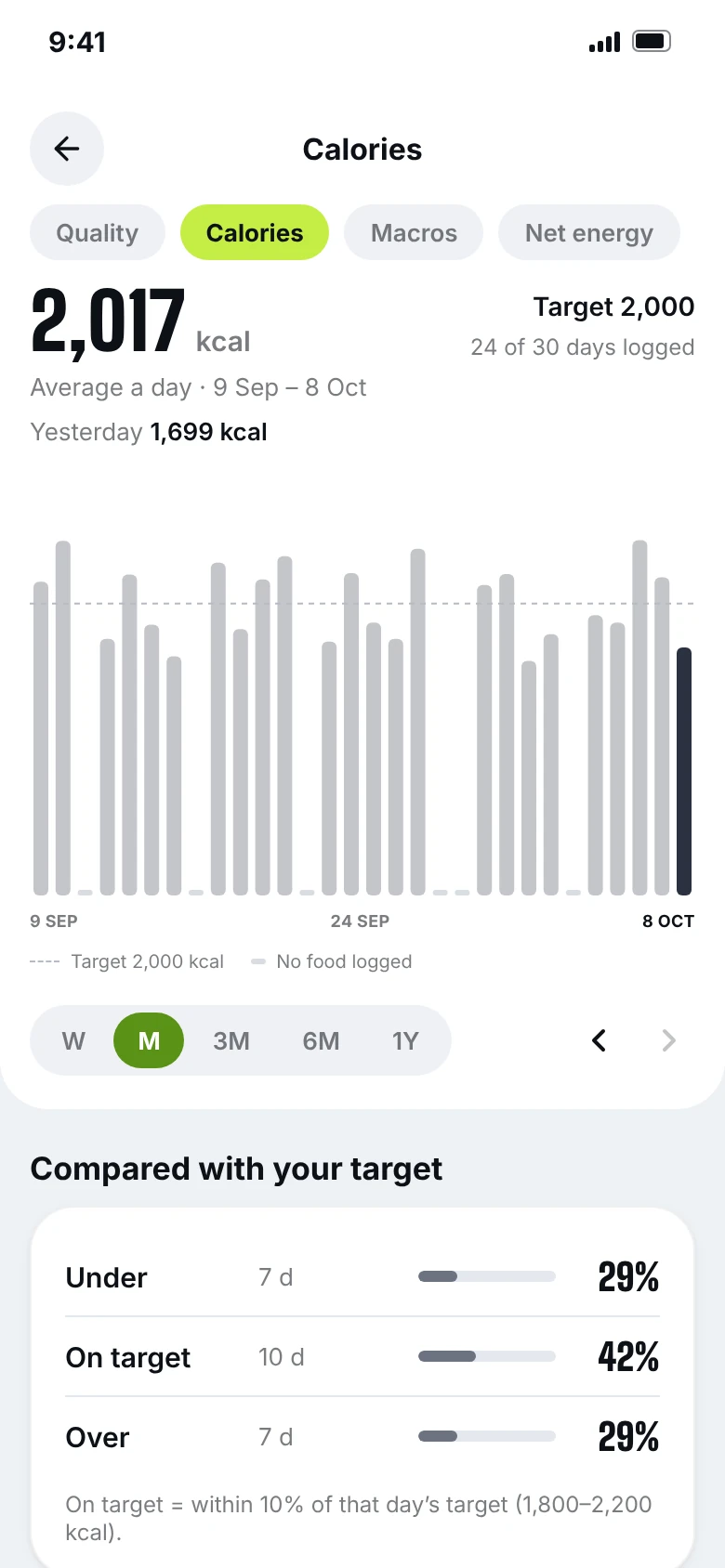
- Your pace in kg a week and about how many weeks to your goal
- Days under, on and over your target
- Weekly averages for the last 6 weeks
If you don't have a food tracking app, download the DietSync Fitness App. It calculates your weekly average weight automatically, right next to your food and training logs.

QUESTIONS
Frequently asked questions
Why did I stop losing weight?
As you lose weight your body burns fewer calories for the same activity, so the deficit you started with slowly shrinks. Tracking gaps (oil, sauces, weekends) are the other common cause.
How do I know if I have hit a plateau?
Your weekly average weight stays flat for at least two weeks while you are tracking accurately. A few days of the same number is normal fluctuation, not a plateau.
How do I break a weight loss plateau?
Make one small change: eat about 250 kcal less a day, add 2,000 steps a day, or add 2–3 cardio sessions a week. Give it two weeks before you judge it.
Should I eat less when I stop losing weight?
A little less, yes: around 250 kcal. Dropping 500–800 kcal overnight makes hunger, energy and training worse and is rarely needed.
Does a diet break help a plateau?
It can, after around eight weeks of dieting. Eating at maintenance for seven days gives your body and mind a rest, then you return to your deficit. Try the smaller fixes first.