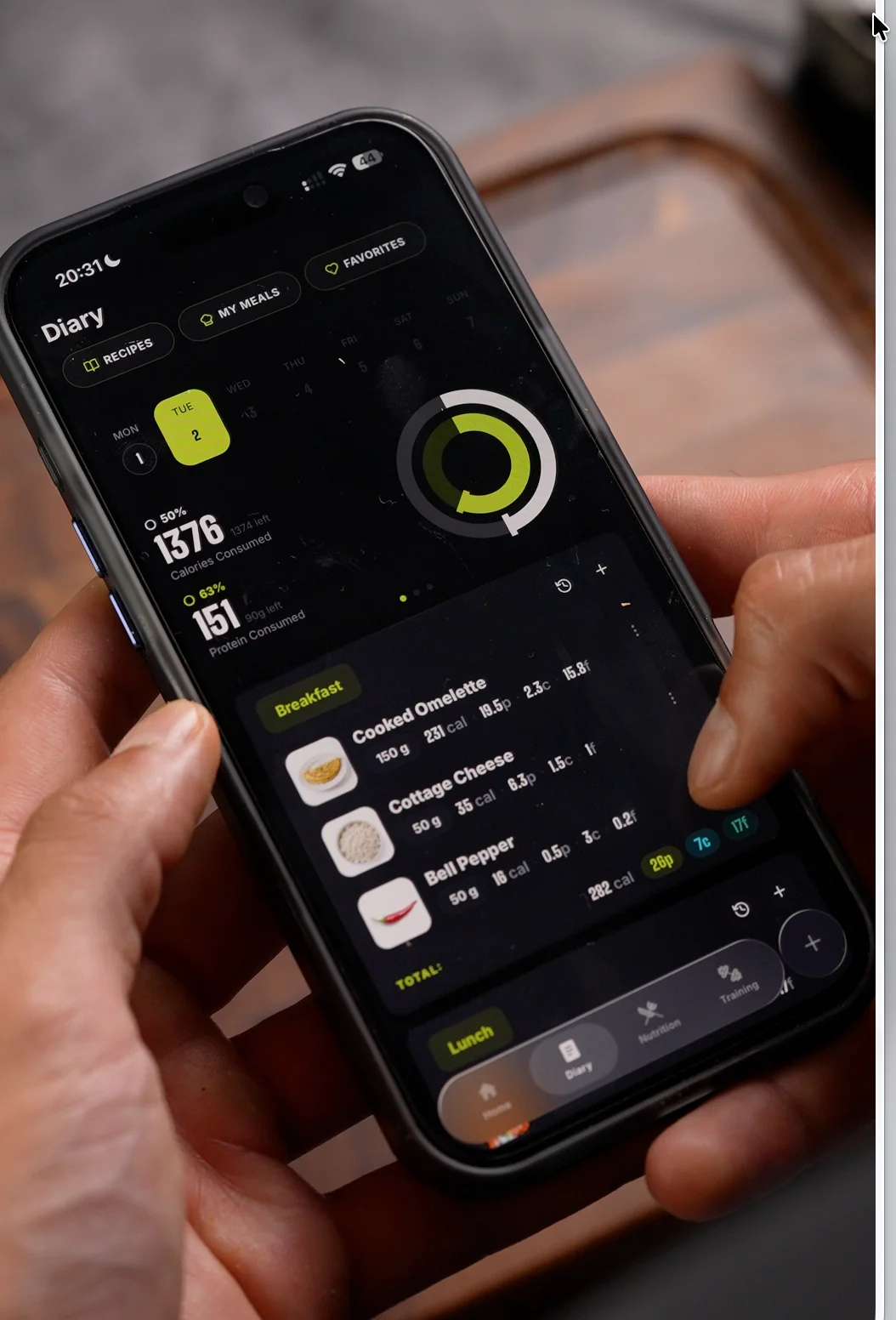
In Episode 2, we calculated your calorie target using your BMR, TDEE, and activity level. If you have not done that yet, go back and read Episode 2 first — the method in this article only works once you have a starting number to test.
Here is something important that most people miss: that number is a hypothesis, not a fact.
A calorie calculator uses population averages to estimate your needs. It does not know your specific metabolism, your actual movement patterns, how efficiently your body absorbs food, or dozens of other individual factors. The calculator gives you the best possible starting point — but your body gives you the actual answer.
The only way to know whether your calorie target is correct is to test it for a week and measure the response. And to measure it correctly, you cannot rely on the scale from day to day. You need to use weekly averages.
In short
- One weigh-in tells you little: water, salt and carbs can move the scale 0.5–1 kg overnight.
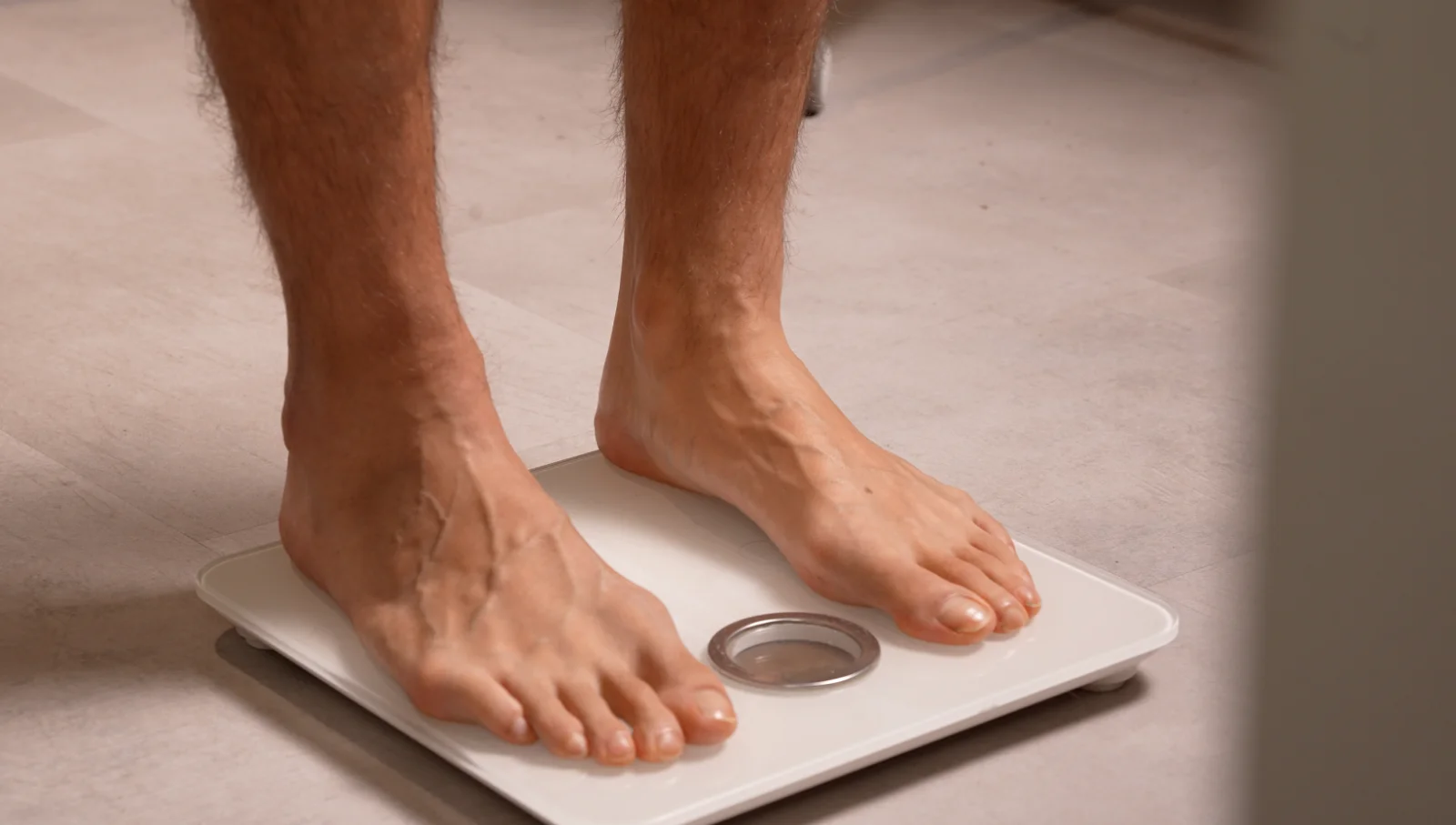
- Weigh yourself every morning in the same conditions and compare this week’s average with last week’s.
- Losing 0.3–0.7 kg a week: your calories work. Faster than 0.8–1 kg: add 100–150 kcal. Flat: that is maintenance, so take 250 kcal off. Going up: take 300–350 kcal off.
- Five weigh-ins out of seven are enough for a useful average.
Why Daily Weigh-Ins Will Mislead You Every Time
Most people weigh themselves once, compare it to yesterday, and draw a conclusion. This is one of the most reliable ways to feel like a failure when you are actually making progress.
Your body weight on any given day is not your fat mass. It is your fat mass plus water, food currently being digested, glycogen stored in your muscles, and dozens of other variables that shift constantly. A single number on a single morning tells you very little about whether your plan is working.
Here is what can cause your weight to go up by 0.5-1 kg overnight with no change in body fat at all:
Sodium intake. A high-salt meal causes your body to retain water — sometimes up to 1-1.5 kg of it. This is temporary and has nothing to do with fat.
Carbohydrate intake. Every gram of glycogen stored in your muscles holds approximately 3g of water alongside it. Eat more carbs one day and you can weigh noticeably more the next morning.
Digestive content. If you had a large meal late at night, some of it is still physically inside you when you step on the scale the next morning.
Hormonal fluctuations. For women especially, weight can vary by 1-3 kg across a menstrual cycle purely due to water retention — regardless of diet.
Hydration level. Even how much water you drank the day before affects the next morning's number.
None of these are fat. All of them affect the scale. This is why tracking daily weight as a performance metric is almost useless — and why the weekly average changes everything.
What the Weekly Average Actually Shows You
When you weigh yourself every day and take the average across seven days, all of the daily noise cancels out. What remains is a much cleaner signal of what is actually happening to your body composition over time.
The daily numbers are full of static. The weekly average is the signal underneath it.
How to Weigh Yourself Correctly
For the weekly average to be meaningful, the conditions need to be consistent every single day. Any variation in conditions introduces variables that distort the number.
The protocol:
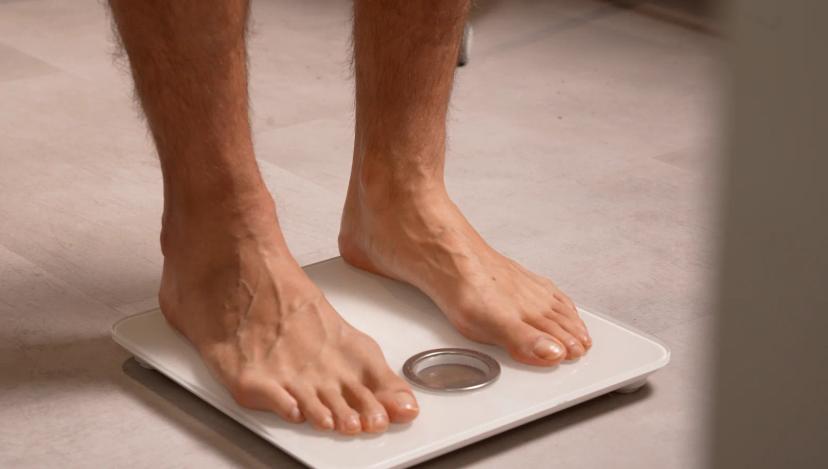
- Weigh yourself every morning immediately after waking up
- Use the bathroom first — every time
- Before eating or drinking anything
- Wearing nothing, or the same light clothing every day
- On the same scale, in the same spot in your home
- Record the number immediately — do not rely on memory
You do not need all 7 days to calculate a useful average. Five out of seven is fine if you miss a day or two. Three or fewer days in a week gives you too little data to trust.
A Real Example — What the Numbers Actually Look Like
Here is what a first week of daily weights might look like for someone who started at 80 kg:
| Day | Weight |
|---|---|
| Monday | 80.4 kg |
| Tuesday | 79.8 kg |
| Wednesday | 80.2 kg |
| Thursday | 80.6 kg |
| Friday | 79.5 kg |
| Saturday | 80.1 kg |
| Sunday | 79.4 kg |
| Weekly Average | 80.0 kg |
Now look at week 2:
| Day | Weight |
|---|---|
| Monday | 79.7 kg |
| Tuesday | 79.2 kg |
| Wednesday | 79.8 kg |
| Thursday | 80.1 kg |
| Friday | 79.3 kg |
| Saturday | 79.6 kg |
| Sunday | 78.9 kg |
| Weekly Average | 79.5 kg |
Week 1 average: 80.0 kg → Week 2 average: 79.5 kg. A drop of 0.5 kg.
This is exactly what a successful first two weeks looks like. The deficit is working.
But look at Thursday of week 1: 80.6 kg — higher than the starting weight. If you only looked at that number in isolation, it would feel like failure. If you had a particularly salty meal on Wednesday evening, or trained legs and stored extra glycogen, or simply drank more water than usual, the scale is going to reflect that — and it has nothing to do with fat.
This is why people quit when they should not. They weigh themselves on a bad day, see a number that does not match their effort, and conclude that the plan is not working. The weekly average would have told them the opposite.
How to Read Your Results
After your first full week, compare your week 1 average to your week 2 average.
If the average is dropping by 0.3-0.7 kg per week: Your calorie target is correct. You are in a genuine deficit. Keep going exactly as you are — do not change anything.
If the average is dropping by more than 0.8-1 kg per week: Your deficit is too aggressive. This rate of loss increases the risk of losing muscle alongside fat. Consider adding 100-150 kcal back in and reassessing after another week.
If the average is staying the same: You have found your maintenance calories — the exact amount your body needs to stay at the same weight. To lose fat, reduce your daily intake by 250 kcal and run the test for another week.
If the average is going up: You are eating above maintenance. Reduce by 300-350 kcal and retest. Do not panic — this is just data telling you to adjust.
The Most Important Mindset Shift
The first week is not about results. It is about collecting data.
You are not trying to lose as much weight as possible in week one. You are trying to find out whether your starting calorie target is accurate. The scale response over the first two weeks tells you everything you need to know — and gives you a precise, evidence-based number to work with for the rest of the cut.
Most people approach the first week as a performance. They want to see the scale drop dramatically to validate their effort. When it does not — or when it goes up temporarily — they interpret it as failure and either give up or make drastic changes too early.
The weekly average removes the emotion from the process. You are not judging yourself day to day. You are collecting numbers, taking an average, and making a rational decision based on what the data says. That shift in approach is one of the most powerful things you can do for your long-term consistency.
What Counts as a Successful First Week
A successful first week is not necessarily one where you lost weight. A successful first week is one where:
- You have 5-7 daily weight entries recorded
- You hit or came close to your calorie target every day
- You tracked your food consistently enough to trust the data
- You can calculate a meaningful weekly average
That is it. Everything else is just context for week two.
An Idea Worth Adding: Track Your Measurements Too
The scale is your primary tool but it is not the only one. Body measurements — waist, hips, chest — captured once per week can reveal progress that the scale misses. If you are training while in a deficit, you may be losing fat and building muscle simultaneously, which can keep the scale stable while your body composition is visibly changing. A tape measure catches this when the scale does not.
Take measurements at the same time of day, in the same spot, every week. Once a week is enough — more than that creates the same noise problem as daily weigh-ins.
How DietSync Handles This
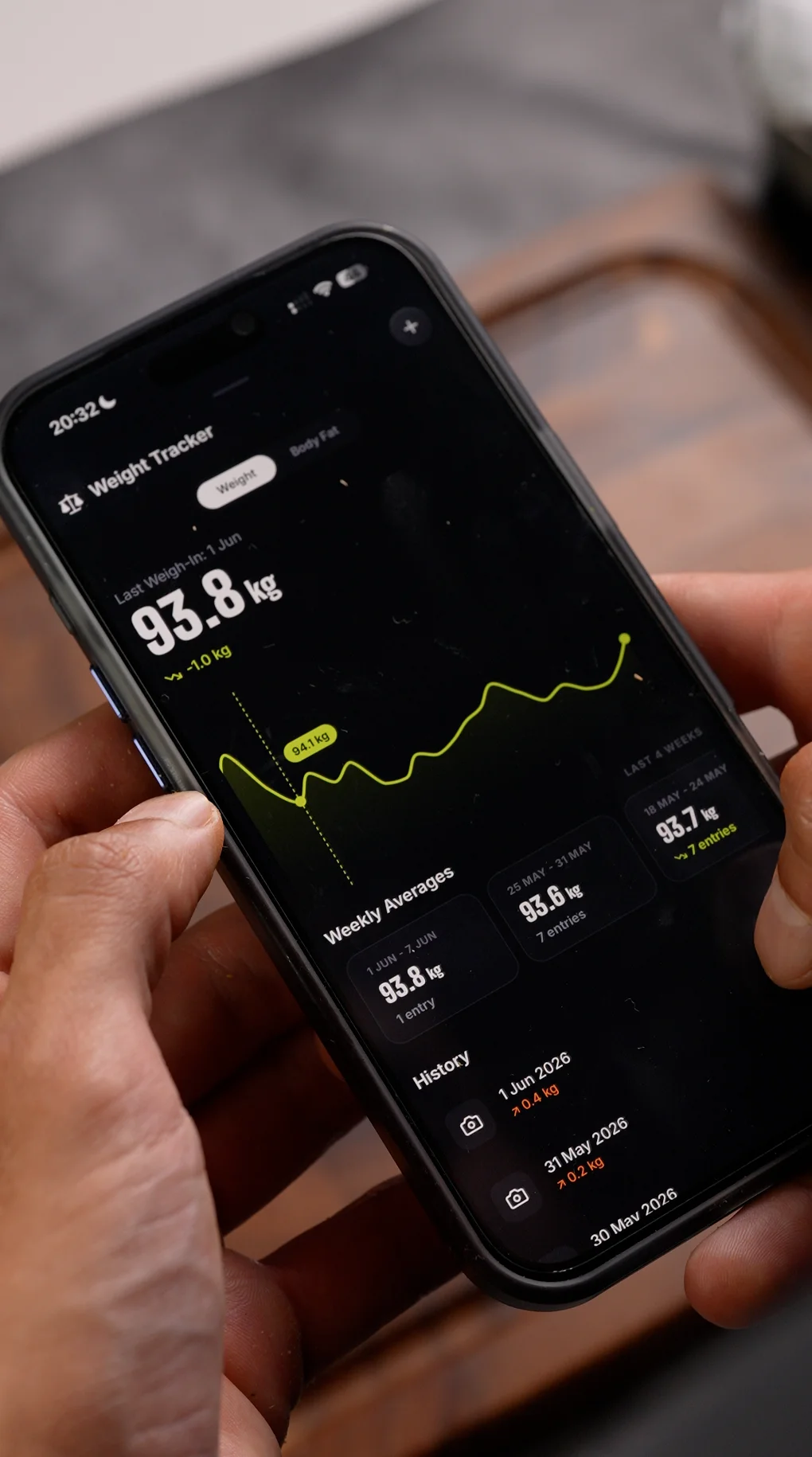
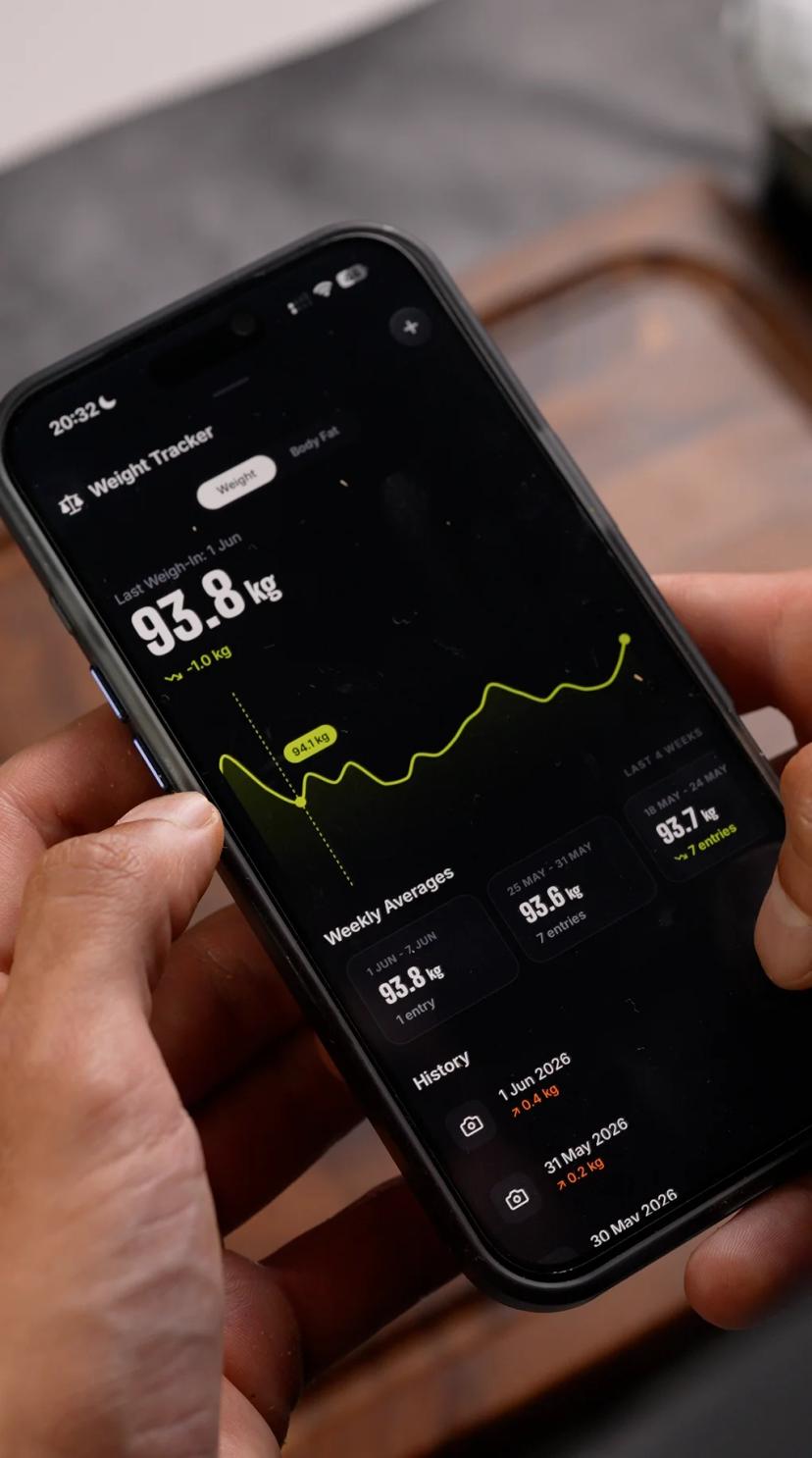
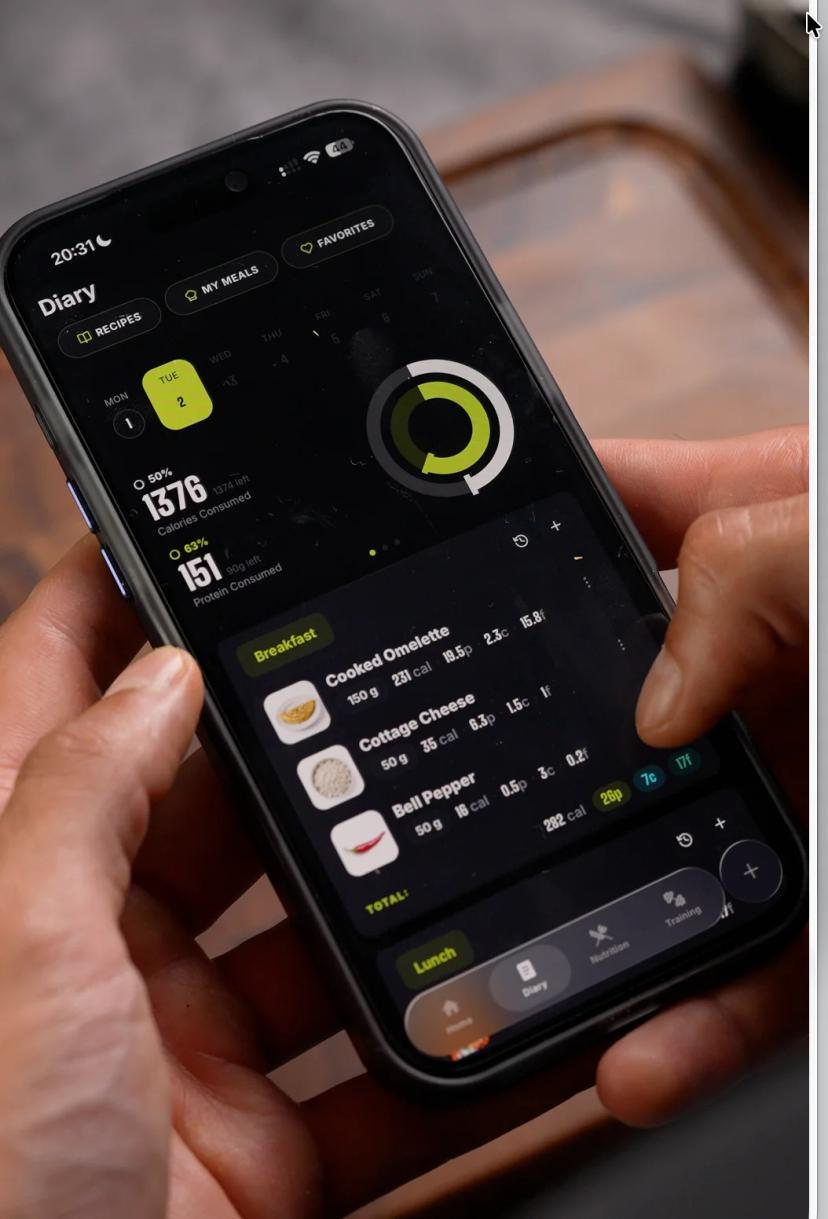
The DietSync Fitness App has a built-in weight tracker that automatically calculates your weekly average from your daily entries. You log your weight each morning and DietSync does the rest — displaying your week-over-week trend so you can see clearly whether the number is moving in the right direction.
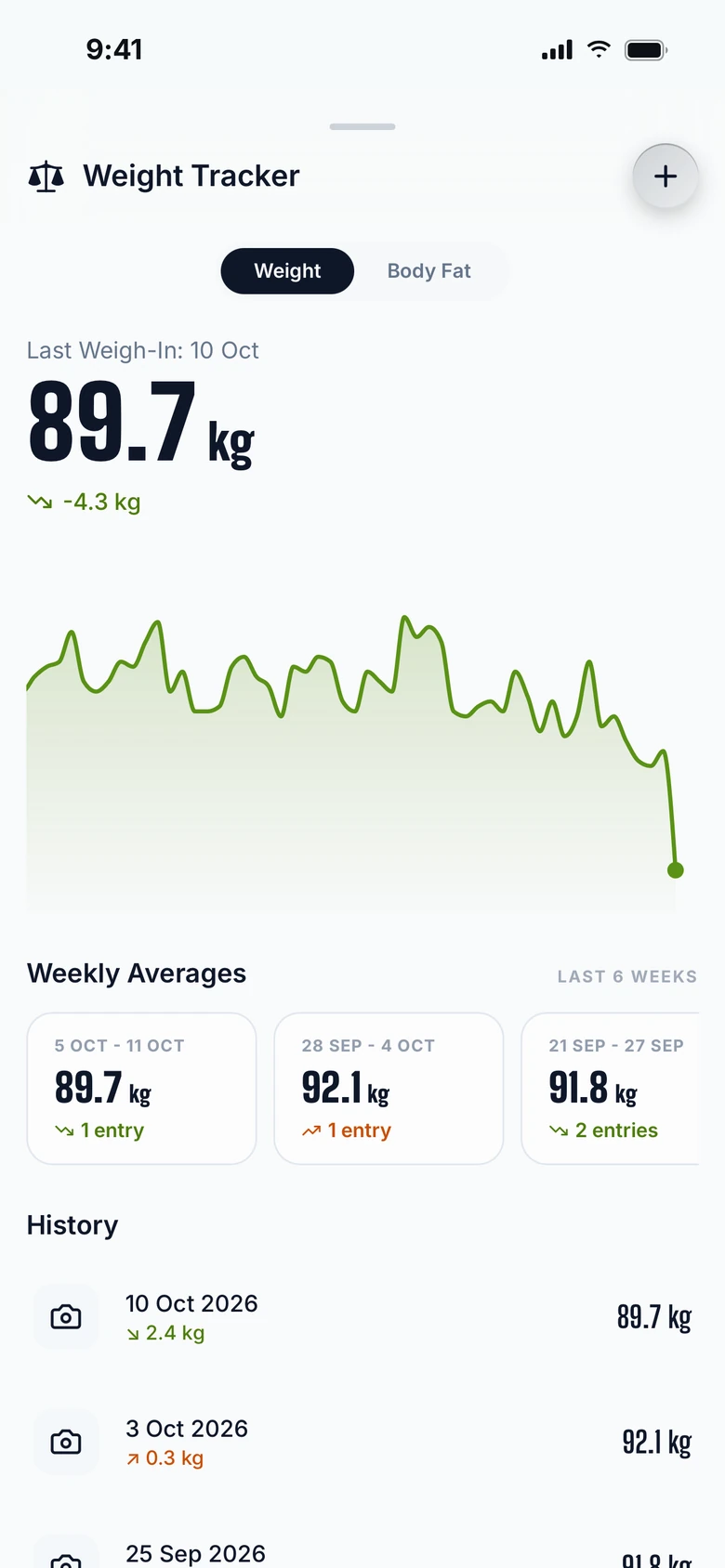
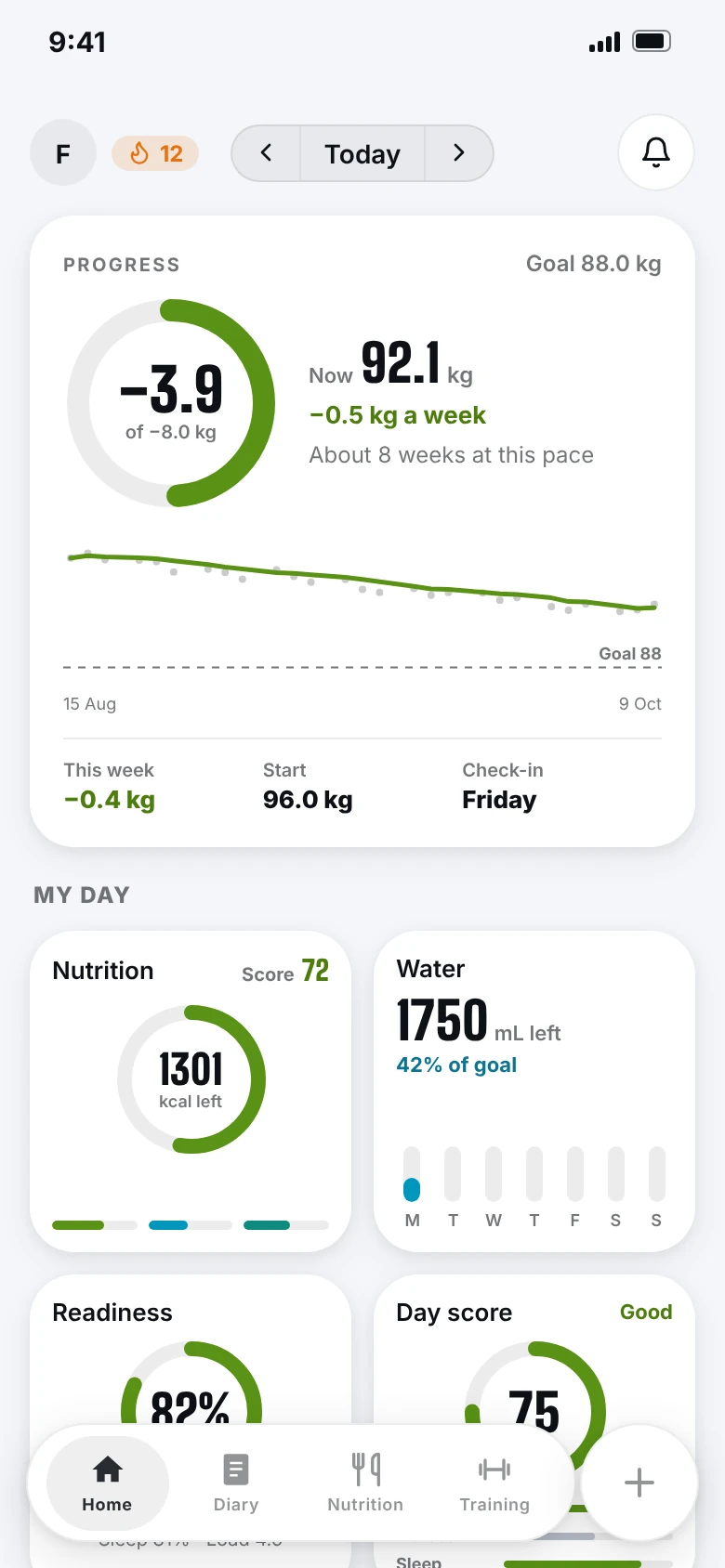
- Log your weight in seconds each morning
- Weekly averages for the last 6 weeks
- The Progress card shows your pace in kg a week
It removes the need to do the maths manually and eliminates the temptation to overinterpret a single bad weigh-in. The app shows you the average, not just the daily number — which means you are always looking at the signal rather than the noise.
If you have not set up your calorie target in DietSync yet, go back to Episode 2 and use the in-app calculator first. Then come back and use the weight tracker to verify whether that target is working for your body specifically.
QUESTIONS
Frequently asked questions
How do I know if my calorie target is working?
Compare your weekly average weight from one week to the next. A drop of 0.3–0.7 kg a week means the target works. Judge it on averages, never on a single morning.
Why does my weight fluctuate so much daily?
Water from salt, the water stored with carbs (about 3 g per gram of glycogen), food in your gut and hormones. None of these are body fat, and they can move the scale 0.5–1 kg overnight.
How do I calculate my weekly average weight?
Add up your morning weigh-ins for the week and divide by the number of days you weighed in. Five out of seven days are enough; three or fewer is too little to trust.
What if my weekly average weight isn’t changing?
Then you are eating at maintenance. Take about 250 kcal a day off and check the average again after another week.
How fast should I lose weight per week?
0.3–0.7 kg a week. Faster than 0.8–1 kg a week raises the risk of losing muscle with the fat; add 100–150 kcal back and reassess.
When is the best time to weigh myself?
Every morning, after the toilet and before you eat or drink, on the same scale in the same place.