High-Protein Biscoff
Basque Cheesecake
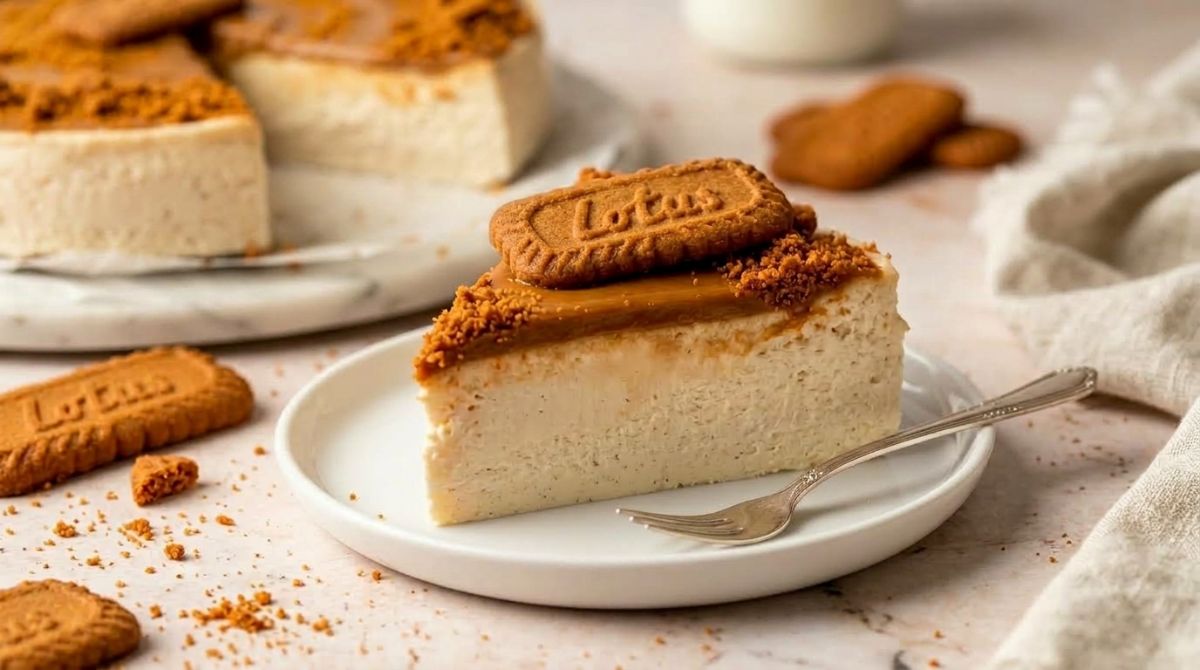
Burnt Basque cheesecake with caramel protein and a Biscoff layer. 20g protein at 239 calories per slice.
 IntermediateDietsync Recipes
The Cheesecake That Is Supposed to Burn
A Basque cheesecake is the one dessert where a scorched top is the goal rather than an accident. It bakes hot and fast with no crust and no water bath, so the outside caramelises deeply while the centre stays barely set. That is the whole character of it, and it is also why it suits a protein rebuild better than any other cheesecake.
Each slice here comes to 239 calories with 20g of protein, which is unusual territory for a baked cheesecake.
Three Dairies Instead of One
A traditional Basque runs on cream cheese and double cream, and that is where its 400-plus calories a slice come from. This version splits the job three ways: 300g of light cream cheese for the tang and structure, 250g of 2% strained yoghurt for body, and 150g of cottage cheese for protein density.
Cottage cheese is the one people hesitate over, and it disappears completely. Beaten into the other two it leaves no curd and no flavour of its own, but it carries 12.5g of protein per 100g at 70 calories, which is the best ratio available in the dairy aisle.
Why Caramel Protein Rather Than Vanilla
The caramel whey is doing flavour work, not just macro work. A Basque cheesecake gets much of its taste from the caramelised top, and a caramel protein reinforces that from the inside rather than fighting it. Vanilla would work, but you would lose the echo between the burnt surface and the filling.
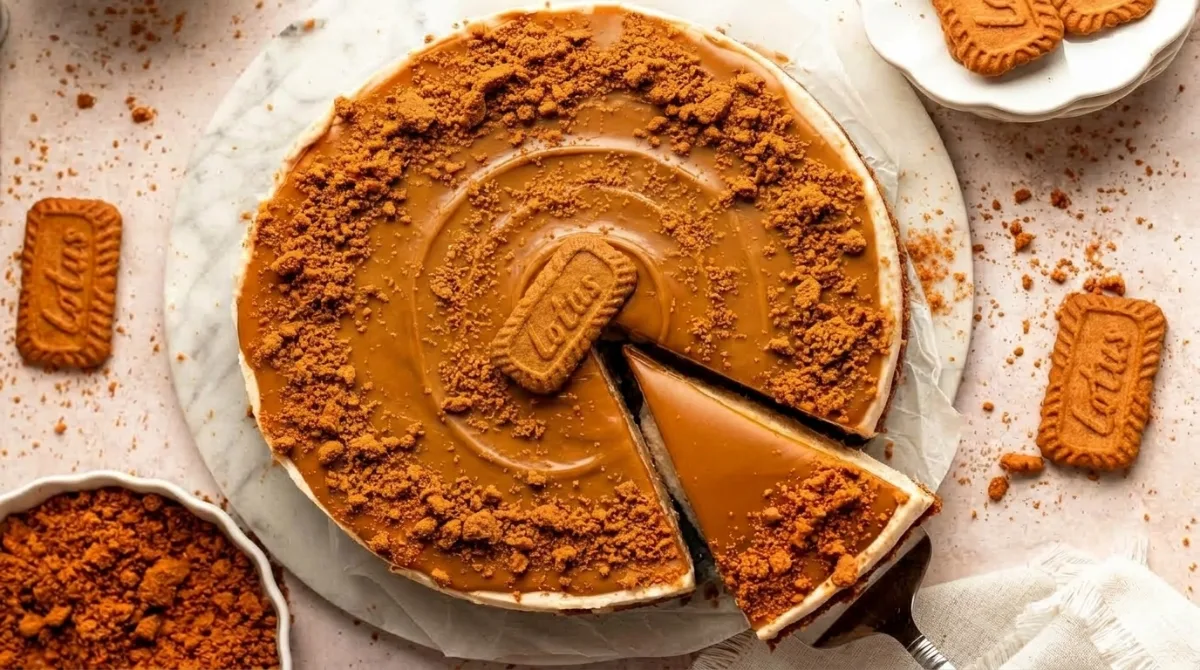
It also pairs with the Biscoff layer, which is fundamentally a caramelised biscuit spread. The three caramel notes stack rather than compete.
The Wobble Is the Doneness Test
Fifty to fifty-five minutes at 200C, and you are looking for set edges with a centre that still moves when you nudge the tin. Not liquid, but not firm either. Baking it until the middle is solid gives you a dense, dry cheesecake with none of the creaminess the style is known for.
The top should go genuinely dark. If it looks like you have gone too far, you are probably right where you want to be.
The Hour With the Oven Door Ajar
This is the step people skip and then wonder why their cheesecake cracks. Turn the oven off and leave the cake inside with the door slightly open for a full hour before it goes anywhere near the fridge.
Cracks come from the surface contracting faster than the centre. A slow, even cooldown lets the whole thing come down together. Pulling a 200C cheesecake straight onto a cold counter is the single most reliable way to split the top.
Then Four Hours, Minimum
After the oven, it needs at least four hours in the fridge and is better overnight. This is not optional patience - the protein and dairy proteins continue setting as they chill, and a cheesecake cut after two hours will slump on the plate.
The Biscoff layer goes on at the very end, once the cake is fully cold, then back in the fridge for thirty minutes to firm. Adding it to a warm cheesecake just melts it into the surface and you lose the distinct layer.
What You Get Per Slice
Eight slices at 239 calories, 20g of protein, 12.5g of carbohydrate and 9.5g of fat. There is no flour anywhere in it, which makes it naturally gluten free, and no added sugar beyond what is in the Biscoff spread itself - the sweetness in the filling comes from a zero-calorie caramel syrup.
To stay on top of your fitness goals, you can track your macros with the DietSync app or explore more high-protein recipes for your meal plan.
WHAT YOU NEED
Ingredients
- Light cream cheese300 g
- Strained yoghurt, 2%250 g
- Cottage cheese150 g
- Caramel whey protein100 g
- Zero-calorie caramel syrup75 g
- Eggs (medium)3 pcs
- Cornflour15 g
Toppings
- Biscoff spread, melted100 g
- Almond milk30 g
METHOD
How to Build It
- 1
Prepare the Tin
Preheat the oven to 200°C and line an 18 cm round baking tin with baking paper, letting it come up above the rim. Basque cheesecakes rise and the paper is what contains them.
- 2
Blend the Batter
In a blender, blend the light cream cheese, strained yoghurt, cottage cheese, eggs and caramel syrup until completely smooth. Take your time here: any cottage cheese curd that survives will show up in the finished slice.
- 3
Add the Protein
Add the caramel protein powder and the cornflour and blend briefly until fully combined with no dry pockets.
- 4
Pour into the Tin
Pour the batter into the prepared tin.
- 5
Bake Hot
Bake for 35-40 minutes, until the edges are set but the centre is still slightly wobbly. The top should be deeply caramelised; that colour is the point of a Basque cheesecake, not a mistake.
- 6
Make the Biscoff Layer
Meanwhile, whisk the almond milk into the melted Biscoff spread and keep it at room temperature (not in the fridge) so it stays spreadable.
- 7
Cool Slowly in the Oven
Turn the oven off and leave the cheesecake inside with the door slightly ajar for an hour. The slow cooldown is what prevents cracking.
- 8
Chill Properly
Once cooled, refrigerate for at least 4 hours, ideally overnight, so it sets completely.
- 9
Add the Biscoff Layer
Top with the Biscoff layer and return to the fridge for 30 minutes.
- 10
Slice and Serve
Slice into 8 and serve.
PERFORMANCE NOTES
Pro Tips
Let It Go Darker Than Feels Right The instinct is to pull it when the top browns. Resist. A pale Basque is an underbaked Basque, and the burnt surface is the entire point of the style.
Door Ajar, Full Hour The most skipped step and the reason most Basque cheesecakes crack. Switch the oven off and walk away for an hour before the fridge.
Beat Out Every Curd Cottage cheese only disappears if you beat it properly. Any curd left in the bowl ends up as a visible lump in the slice.
ADAPTS TO YOUR GOAL
Modifications
Adjust this recipe to fit your goal
Target: Adjust macros for calorie deficit goals
- Swap the Biscoff topping for PB2 powder mixed with caramel extract and water.
- Use 0% fat strained yoghurt and fat-free cottage cheese.
- Reduce the Biscoff layer by half to save approximately 60 calories per serving.
QUESTIONS
Frequently asked questions
Why is my Basque cheesecake supposed to look burnt?
That is the defining feature of the style. It bakes hot and fast with no crust and no water bath, so the surface caramelises well past where a New York cheesecake would stop. The dark top is where most of the flavour comes from.
Can you taste the cottage cheese?
No. Beaten thoroughly with the cream cheese and yoghurt it leaves no curd and no flavour of its own. It is there because it carries 12.5g of protein per 100g at only 70 calories, which is the best ratio available in the dairy aisle.
Why did my cheesecake crack?
Almost always cooling too fast. The surface contracts quicker than the centre and splits. Leave it in the switched-off oven with the door ajar for a full hour before it goes near the fridge.
How do I know when it is done?
By the wobble, not the clock. The edges should be set but the centre should still move when you nudge the tin. Baking until the middle is firm gives you a dense, dry cheesecake instead of a creamy one.
NUTRITION PER SERVING
Macro Breakdown
20g
Protein
34%
14.2g
Carbs
24%
11.1g
Fat
42%
PARTNER OFFER
Fuel Your Gains With
FuelSync
Premium proteins to match your macros. DietSync readers get an exclusive discount.
Use code
DIETSYNC15
for 15% off your order
FITNESS STATS
Fits Your Goals If…
PROTEIN METRIC
Protein Efficiency
8.4g
protein per 100 kcal
GoodGood ratio for maintaining lean mass on any goal.
Track this in
DietSync App
This recipe is already in the DietSync App library. Log it in 2 taps and see exactly how it fits your macros for the day.
 Download the App
iOS & Android app
STAY IN SYNC.
Latest recipes, challenge news, and exclusive offers — straight to your inbox.