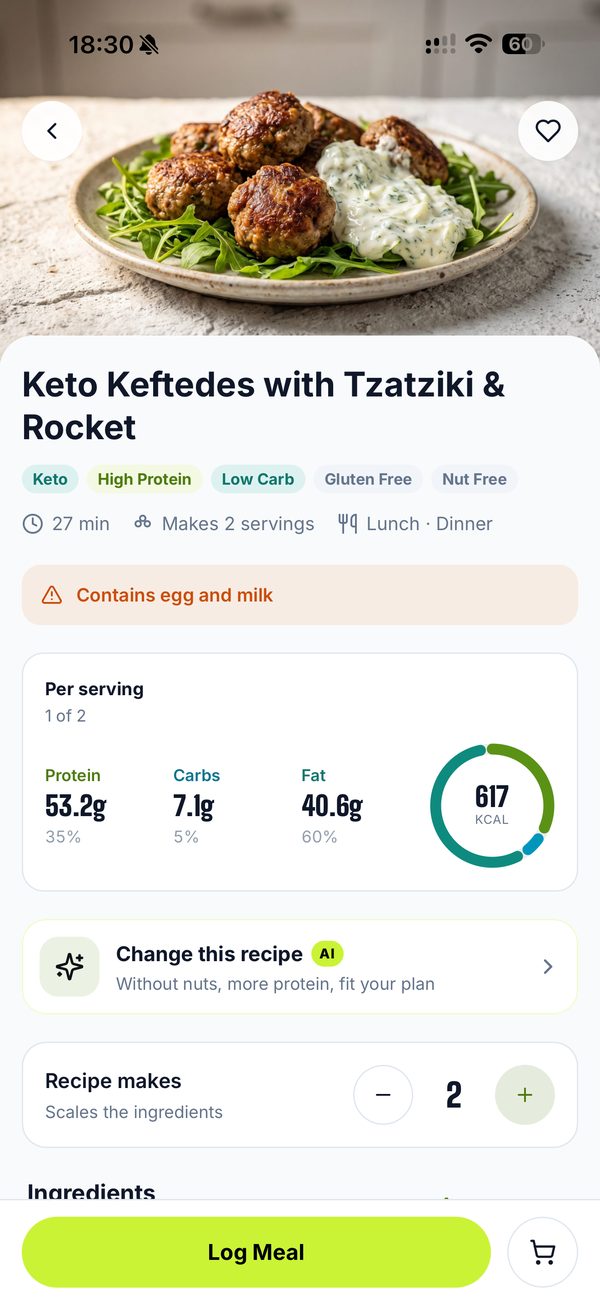
Bread-free keftedes with tzatziki and rocket. 53 g protein and 6 g net carbs at 617 kcal per plate of five.
By Frixos Dimitriadis · Published November 7, 2026 · Updated November 7, 2026
2 servings · Prep 15 min · Cook 12 min · Total 27 min · Per serving: 617 kcal, 53.2 g protein, 7.1 g carbs, 40.6 g fat
Keftedes are on every Greek and Cypriot table: at a taverna as a meze, at home for Sunday lunch, cold in a lunchbox the next day. The classic recipe uses bread soaked in water to keep them soft, and that bread is where most of the carbs come from. Take it out, let parmesan and egg do its job, and keftedes become one of the easiest keto meals you can make.
One serving is five keftedes with tzatziki and rocket: 617 kcal, 53.2 g of protein, 40.6 g of fat and 6.1 g of net carbs (7.1 g of total carbs minus 1 g of fibre). The recipe makes 2 servings, and the numbers come from the DietSync app, where every ingredient is weighed in grams.
In classic keftedes the soaked bread does two things: it keeps the mix moist and it holds it together. Here the egg does the binding, and the grated onion brings the moisture. The 30 g of parmesan adds the salty, savoury depth that bread never had, and about 10 g of protein to the batch.
The fresh mint and oregano are what make them taste Greek, so don't skip them. A little garlic goes into the mix and the rest goes into the tzatziki.
The 400 g of beef gives about 40 g of protein per serving, and the parmesan, egg and yoghurt add the rest. The fat comes from four places: the beef, the olive oil for frying, the full-fat yoghurt and the parmesan. The few carbs come from the onion, the yoghurt and the cucumber, which is why the net carbs stay at 6.1 g per plate.
In the DietSync app
Grate the onion instead of chopping it. It melts into the mix, keeps the keftedes moist and stops them falling apart in the pan. Mix with your hands only until everything comes together, because overworked mince turns dense. Then shape 10 keftedes of about 50 g each with wet hands, so the mix doesn't stick and you don't have to press.
Fry them over medium heat, not high. They need 10–12 minutes to cook through, turning them every few minutes, and high heat burns the outside before the middle is ready. Leave space between them in the pan so they brown instead of steaming.
Good tzatziki is thick enough to hold a fork. The secret is the cucumber: grate it, then squeeze it hard in your hands or in a clean cloth until no more water comes out. Mix it with full-fat Greek yoghurt, the rest of the garlic and the dill. Make it 30 minutes before you eat, if you can, so the garlic softens and the flavours come together. Any leftover tzatziki makes a good keto snack with cucumber and pepper sticks.
Frying in 15 g of olive oil gives the best crust. If you want less fat, bake them on a lined tray at 200°C for 15–18 minutes, turning them once; without the oil each serving has about 66 kcal less. An air fryer works too, at 180°C for 10–12 minutes, in one layer. Whichever you choose, break one open before serving: it should be cooked all the way through, with no pink in the middle.
Keftedes are the easiest way to eat keto without cooking two dinners. Everyone at the table gets the same keftedes, tzatziki and salad. Those who aren't on keto can add pitta, rice or fried potatoes to their own plate, and you add more rocket, a few olives or grilled vegetables such as courgette and peppers to yours. Nobody feels they are eating diet food, because they aren't.
Keftedes are one of the best keto meal-prep foods. Double the batch, fry them all, and keep them in the fridge for up to 3 days. They are just as good cold with tzatziki as they are hot. You can also freeze them, cooked or raw, for up to 2 months. Keep the tzatziki in a separate box; it keeps 2 days.
At 6.1 g of net carbs and 53 g of protein, one plate leaves plenty of room in a strict 25 g keto day. Pair them with the breakfasts and snacks in our 7-day keto meal plan, and you will hit your protein without thinking about it.
More Greek classics made keto: keto moussaka with cauliflower topping, beef stifado over cauliflower mash and shrimp saganaki.
The recipe is in the DietSync app, in the Keto Main Meals book. Log it in one tap and the app keeps count of your net carbs, protein and fat for the day.
Grated onion melts into the mix and keeps the keftedes juicy. Chopped onion stays in pieces and makes them fall apart.
Shape the keftedes with wet hands. The mix doesn't stick and you don't need to press hard, so they stay tender.
Leave space between them so they brown instead of steaming. Fry in two batches if your pan is small.
Classic keftedes use bread or rusks soaked in water to keep them soft, and that is where most of their carbs come from. Here the egg binds the mix and the parmesan adds flavour and helps hold the juices, so you don't miss the bread.
Yes. Bake them on a lined tray at 200°C for 15–18 minutes, turning once. Without the 15 g of olive oil, each serving has about 66 kcal less.
Yes, when it is made with full-fat Greek yoghurt. The 120 g of yoghurt in this recipe has 4.2 g of carbs, so about 2 g per serving.
Five. The mix makes 10 keftedes of about 50 g each, and the recipe serves 2.